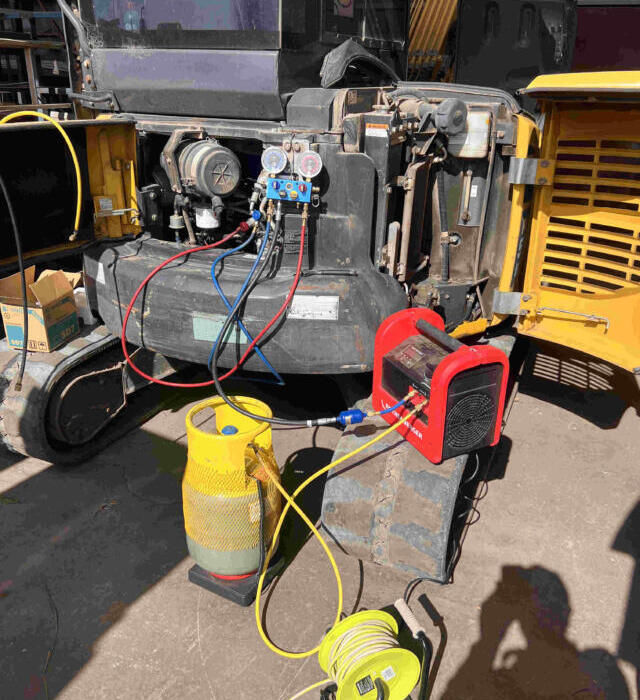
Reliable heavy machinery air conditioning repairs in Geelong help keep excavators, loaders, dozers and other earthmoving equipment operating comfortably during hot Australian conditions. When cabin cooling fails, operators can experience increased heat exposure, discomfort and fatigue during long shifts. Sartori’s Mechanical Services provides air conditioning servicing, fault diagnostics and repairs for trucks and heavy machinery, helping equipment owners identify problems and minimise downtime.
Why does heavy machinery air conditioning stop working?
Heavy machinery air conditioning systems operate in demanding environments where dust, vibration, engine heat and extended operating hours can affect performance. Common causes of poor cooling include refrigerant leaks, damaged hoses, blocked condensers, faulty compressors, electrical problems and restricted cabin airflow. Some systems gradually lose cooling performance, while others stop working suddenly or operate intermittently. Identifying the underlying fault is essential because poor cooling does not automatically mean the system needs more refrigerant.
Common air conditioning faults in excavators and earthmoving equipment
Excavators, loaders, graders and dozers use air conditioning systems with components similar to those found in other vehicles. However, exposure to dust, vibration and demanding operating conditions can increase wear and maintenance requirements. Common faults include:
- Refrigerant leaks: Damaged hoses, seals or fittings can allow refrigerant to escape, reducing cooling performance.
- Compressor problems: A worn or faulty compressor may struggle to circulate refrigerant effectively.
- Blocked condensers: Dust, mud and debris can restrict airflow through the condenser, reducing its ability to release heat.
- Electrical faults: Damaged wiring, relays, sensors or switches can interrupt system operation.
- Blower motor faults: A failing blower motor or restricted cabin filter can reduce airflow through the vents.
These faults can produce similar symptoms, making accurate diagnosis important before replacing components or attempting a regas.
Why dust, vibration and long operating hours affect air conditioning
Earthmoving equipment frequently operates around airborne dust, soil and debris, which can accumulate around condensers, cooling packs and cabin air filters. Restricted airflow makes it harder for the air conditioning system to remove heat, even when refrigerant levels are correct. Constant vibration can also contribute to wear in hoses, fittings, mounting points and electrical connections, potentially causing refrigerant leaks or intermittent faults.
During Australian summer conditions, poor cabin cooling can become more than an inconvenience. Safe Work Australia explains that excessive workplace heat can contribute to fatigue and heat-related illness. Maintaining effective cabin cooling helps support operator comfort and manage heat exposure alongside suitable breaks, hydration and other workplace heat controls.
Does your machinery need an air conditioning regas or repair?
A machinery aircon regas involves recovering and replacing refrigerant according to the system’s specifications. However, regassing is not a solution to every cooling problem. Air conditioning systems are sealed, so low refrigerant may indicate a leak that needs investigation. Simply adding refrigerant without repairing the underlying fault can result in the same problem returning.
A qualified technician may inspect hoses, seals, fittings, condensers and other components to locate refrigerant leaks before completing repairs and correctly charging the system. If the problem involves a faulty compressor, electrical circuit, blower motor or blocked condenser, adding refrigerant will not resolve the issue.
How are heavy machinery air conditioning faults diagnosed?
Effective heavy equipment air conditioning repairs begin with identifying the cause of poor cooling rather than assuming a particular component has failed. A technician may check cabin vent temperatures, airflow, compressor operation and condenser condition. Refrigerant pressure and temperature readings can help assess system performance, while specialist leak detection equipment can identify refrigerant escaping from hoses, fittings or components.
Electrical testing may also be required to investigate faulty switches, sensors, wiring or blower motors. Once the fault is confirmed, the technician can recommend the appropriate repair, whether that involves replacing a damaged hose, repairing an electrical connection, servicing the cooling system or replacing a failed compressor. Refrigerant handling must be performed by appropriately licensed technicians using suitable equipment.
Can heavy machinery air conditioning repairs be completed on-site?
Many heavy machinery air conditioning inspections and repairs can be completed on-site, depending on the fault, component accessibility and equipment required. Mobile servicing is particularly useful for excavators, loaders and other machinery operating on construction sites, farms and remote work locations, where transporting equipment to a workshop can interrupt operations.
Sartori’s Mechanical Services offers mobile and workshop-based air conditioning servicing and repairs throughout the Geelong region. On-site work may include fault diagnostics, leak detection, regassing and component replacement, while more extensive repairs may require workshop facilities.
How regular servicing helps prevent air conditioning failures
Air conditioning systems should be inspected before periods of intensive summer operation rather than waiting until cabin cooling stops working. Preventative maintenance may include checking cabin filters, inspecting condenser airflow, examining hoses for abrasion and confirming that the system cools effectively. Operators can also identify developing problems by reporting reduced airflow, unusual compressor noises, unpleasant smells or intermittent cooling.
There is no universal regassing interval for every machine. Refrigerant should be assessed and serviced according to the system’s condition and manufacturer requirements. For fleet managers, incorporating air conditioning inspections into scheduled machinery servicing can help identify problems before equipment is required for extended summer shifts.
Heavy machinery air conditioning repairs in Geelong with Sartori’s Mechanical Services
Reliable cabin cooling supports operator comfort and helps manage heat exposure during demanding work. Safe Work Australia identifies fatigue as a workplace risk that can affect people operating machinery. Maintaining a comfortable cabin temperature, alongside appropriate heat management measures, can support safer working conditions and help operators remain focused.
Sartori’s Mechanical Services provides heavy machinery air conditioning repairs in Geelong for excavators, loaders, dozers, graders and other equipment. Services include fault diagnostics, leak detection, regassing, compressor and component replacement, and preventative maintenance. With mobile servicing and a workshop in North Geelong, the team can assess faults and recommend repairs suited to the machine and its operating requirements.
If your excavator or earthmoving equipment is blowing warm air, struggling to cool the cabin or has stopped working altogether, contact Sartori’s Mechanical Services to arrange an inspection or discuss your repair requirements.